
What is preimplantation genetic Diagnosis?
Preimplantation genetic Diagnosis (PGD) is a genetic screening test that can be performed on embryos created via in vitro fertilization (IVF) by examining an embryo for a specific genetic mutation known to cause serious disease. It enables people with an inheritable condition in their family to avoid passing it on to their children.
Good candidates for PGD
PGD avoids pregnancy termination as it allows selection of an embryo free of the genetic disease at issue before pregnancy is established. PGD is available for almost any inherited condition for which the exact mutation is known. PGD is best suited for:
Women over age 37 (due to higher risk of abnormal embryo genetics with normal reproductive aging)
Couples who are at risk of having a child affected with an inherited genetic disease
History of recurrent miscarriages due to chromosomal abnormalities
Individuals with known single gene disorder, e.g. cystic fibrosis, cystic disease, Tay Sachs disease,
Individuals with a chromosomal re-arrangement, e.g. chromosomal translocation in which a segment of a chromosome is found at a location other than its normal place,
Couple with a child known to have a genetic mutation, or
How Does PGD Work?
Traditional PGD for single gene mutation requires a DNA probe custom made for the specific genetic mutation carried by an affected individual or couple. A blood or buccal membrane sample must be obtained from the couple planning to have IVF and PGD. It takes 12-16 weeks for the customized DNA test development.
A newer technique in PGD is called karyomapping. It tests just a couple of weeks, not months, for test development and allows a universal test for PGD of almost any genetic mutation. Essentially karyomapping finds a fingerprint that is unique to the chromosome that carries the defective gene. The embryos are tested for this presence of this fingerprint. Whenever the fingerprint is seen in an embryo it means it has inherited the chromosome carrying the defective gene.
Often PGD is done along with PGS for chromosomal aneuploidy, selecting an embryo with a normal set of chromosome AND without the known genetic mutation.
How is PGD performed?
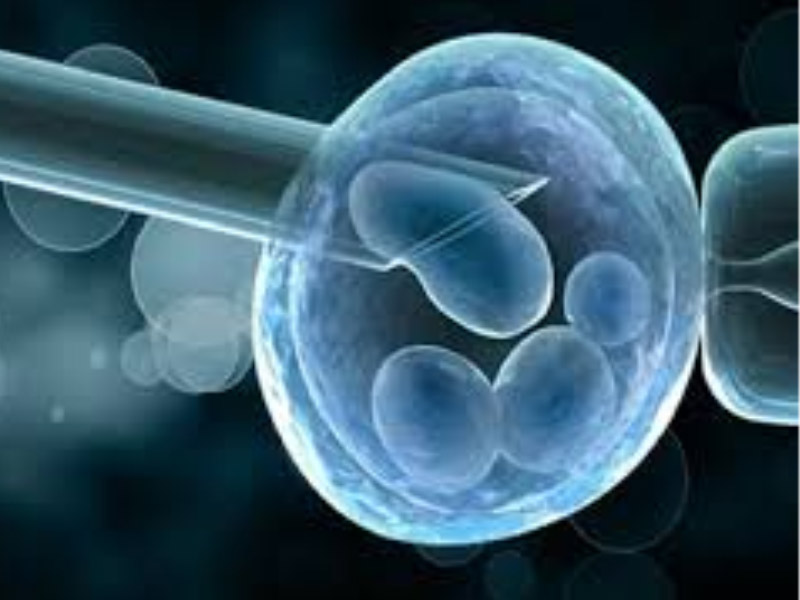
IVF is a requirement in order to obtain embryos for PGD. After eggs are retrieved and fertilized in the lab, the embryologist will perform assisted hatching on the embryos to help obtain cells for testing. When the embryo reaches the blastocyst stage, a few of the cells on the outside of the embryo are biopsied and sent for genetic analysis.
What are the Steps in PGD?
The entire process of PGD consists of multiple steps, each step performed by different experts and laboratories.
The first part is in-vitro fertilization (IVF) with either conventional IVF or intracytoplasmic sperm injection (ICSI) by which embryos are produced. Fertilized embryos are cultured for 3 to 5 days. This part occurs at Family Fertility Center.
The second part is embryo biopsy. Embryo biopsy is performed on the third or fifth day of embryo development
In Day 3 embryo biopsy, one to two cells are removed for testing, or
In Day 5 embryo biopsy, several (3 to 6) cells are removed for testing.
Cells within a day 5 or day 6 embryo have separated into two types: cells which will form the fetus (inner cell mass) and cells which will form the placenta (Trophectoderm). More cells can be removed at this stage (from the Trophectoderm) without compromising the viability of the embryo, possibly leading to a more accurate test.
Biopsy of a day 5 embryo
After the cells are biopsied and placed in test tubes, the tubes are transported by same-day overnight courier to outside reference laboratory for analysis.
Usually it takes over 24 hours before the results are available. Hence freezing of the embryos using a rapid freeze method called vitrification is necessary. Freezing of the embryos takes place at Family Fertility Center.
The final step, the thawing of a frozen embryo, typically a single embryo with normal PGS result, in subsequent cycle after the in-vitro fertilization procedure, and the transfer of the embryo back into the uterus is performed at Family Fertility Center.
What are the risks of PGD?
Most of the risks involved in PGD treatment are similar to those for conventional IVF. For more information on the risk of IVF, click here.
With PGD, there is also the possibility that some embryos may be damaged by the process of cell removal or testing may not be 100% reliable or conclusive.
What is the Chance of Having a Baby with PGD?
It is difficult to assess success rates for PGD because there is currently little data available. Most women use this treatment not because they have fertility problems but because they want to avoid having a child with a genetic disease.
As with most fertility treatments, success depends on many factors, including the woman’s age and whether a cause of infertility has been identified.
Sometimes no embryos are suitable for transfer to the womb, for reasons including:
Not enough eggs are produced or fertilized,
Removing the cells to be analyzed damages the embryos, or
All the embryos are affected by the genetic disease.
Is Prenatal Testing Still Necessary After PGD?
Because PGD is carried out on a minute amount of tissue, the test can never be 100% accurate. With newer PGD test using karyomapping, the chance of successfully detecting an embryo affected by a specific inherited disorder is better than 95%. Because there is a small chance of an incorrect diagnosis, it is strongly recommended that prenatal testing (for example amniocentesis or chorionic villus sampling – CVS) is used to confirm that any pregnancy is unaffected. Amniocentesis and CVS collect many thousands of cells from the fetus and are therefore more accurate.